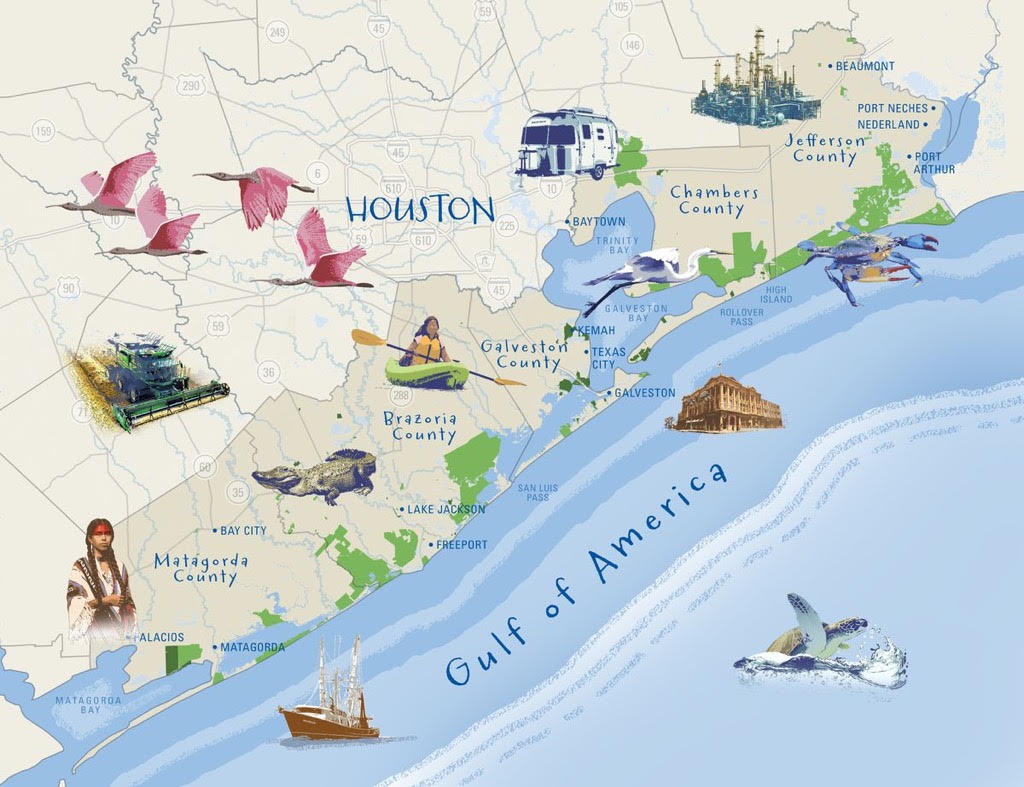
A National Recreation Area is a designation given by Congress to areas of land and water with significant outdoor recreational, natural, heritage, and cultural resource potential. National Recreation Areas are highly regarded and enjoy an enhanced stature among the universe of recreational designations. They are chosen because of their unique recreational potential and are recognized and valued by tourists from around the world. A unit of the National Park System designated as National Recreation Areas is an especially good fit for Texas because it allows for significant local participation and control.
There are 18 National Recreation Areas in the US , including Lake Meredith and Amistad in Texas. They range in size, contiguity, land ownership structure, governing institutions and functional purposes. The National Park Service provides a coordinating presence and expertise, but may own little of the managed lands.


The purpose of H.R. 9325, the Lone Star Coastal National Recreation Area Act, introduced in the U.S. House by Congressman Randy Weber (R-TX) and S. 5677 introduced in the U.S. Senate by Senator John Cornyn (R-TX) is to enhance the stature of the Upper Texas Gulf Coast among the universe of recreational designations.
The legislation was drafted by Lone Star Coastal stakeholders and sets up a framework for a voluntary public-private partnership to preserve the unique heritage and coastal landscapes of the upper Texas coast, improve access to the outdoors and strengthen rural economies by promoting nature and heritage-based tourism across the five-county region of Jefferson, Chambers, Galveston, Brazoria and Matagorda.
Now that bills have been introduced in both the House and the Senate, in order for the LSCNRA to become a designated National Recreation Area, Congress must pass the bill and the President must sign it into law.
How You Can Help Advance the Legislation
Contact your U.S. Representatives and Senators to express support for the Lone Star Coastal National Recreation Area Act
Encourage members of the House and Senate, and especially the Texas Delegation, to cosponsor the legislation.
Share the legislation and information about the proposal with local elected officials, organizations, businesses, and other potential supporters.
Submit letters of support or organizational endorsements to the Alliance.